

The Future is Faster Than You Think
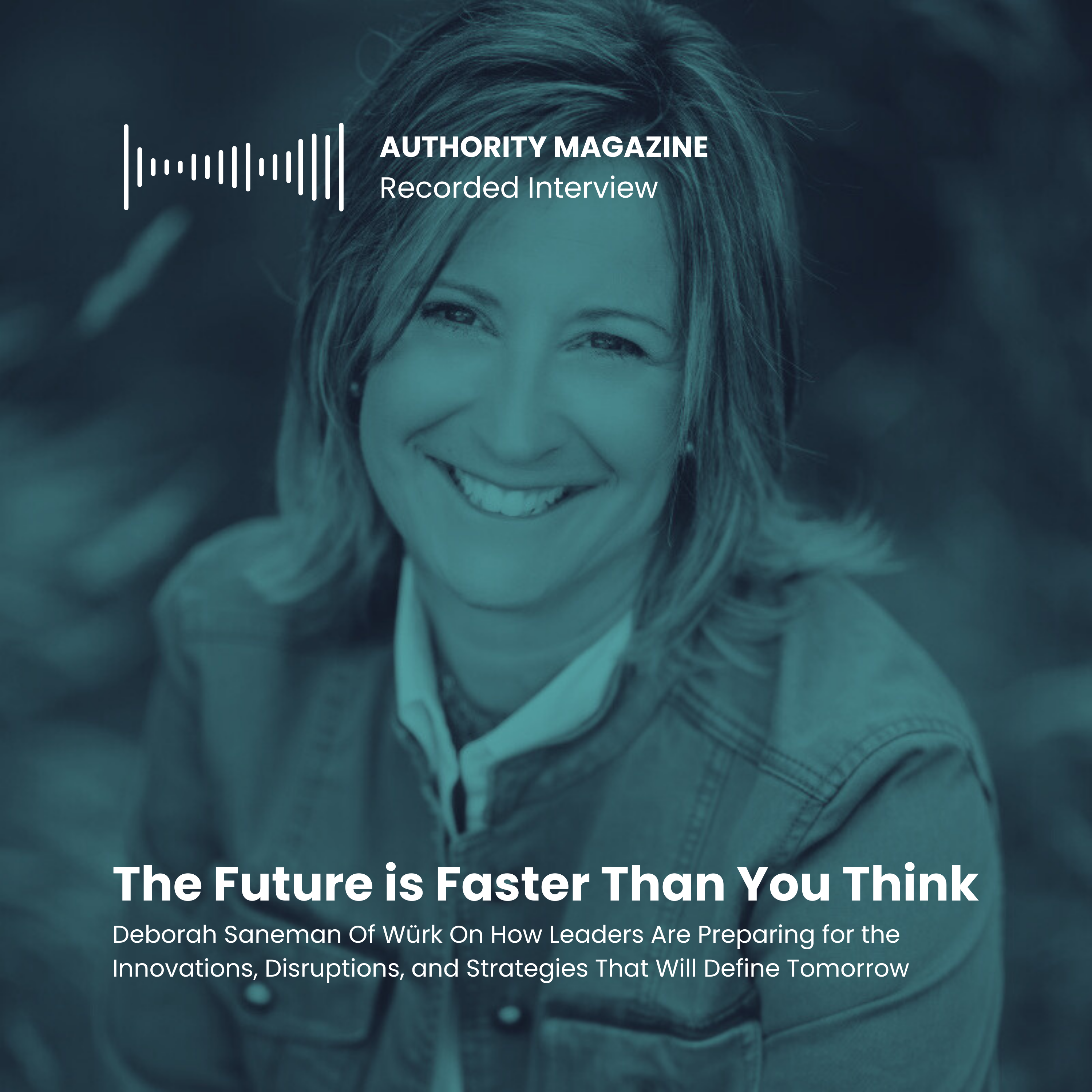
Source: Authority Magazine
By: Authority Magazine
Published December 25th, 2025
Pay attention to KPIs
Your data tells a story. Our leadership dashboard tracks performance across departments, and subtle shifts often signal bigger trends. For example, when we noticed web impressions rising but clicks falling, our marketing team traced it to changes in Google AI overviews (a.k.a. “The Crocodile Effect”), an external factor impacting everyone. Recognizing and adapting to those insights, as well as optimizing for AI results, keeps us ahead.
The pace of change is accelerating, with innovations and disruptions reshaping industries faster than ever. Leaders must not only anticipate these changes but also develop strategies to thrive in this evolving landscape. How are forward-thinking leaders preparing for the technologies and challenges of tomorrow? What strategies are they putting in place today to ensure success in the future? As part of this series, we are interviewing Deborah Saneman.
Deborah Saneman is the Chief Executive Officer at Würk, where her responsibilities include leading processes across the entire organization, designing and implementing business strategies and maintaining a positive and ethical work environment. Deborah has over 25 years of business operations experience under her belt. Prior to Würk, Deborah worked for 27 years at Kelly & Associates. There, she held multiple positions including Corporate Controller and Chief Operating Officer. A strategic corporate thinker, Deborah is experienced at driving results and enhancing business operations from the ground up. Her passion lies in working alongside teams to identify challenges and oversee the solutions from start to finish. Deborah is also a CPA and past President of the Independent Payroll Providers Association in 2020 through 2021, serving on the board of directors for five years. Additionally, she chaired the Business Excellence Conference in 2020. She holds a Bachelor’s degree in Business Administration from Salisbury State University.
Thank you so much for joining us in this interview series. Before we dive into our discussion, our readers would love to “get to know you” a bit better. Can you share with us the backstory about what brought you to your specific career path?
In my prior role in Financial services, I experienced a defining moment that changed my career path. During an audit, we discovered that our organization had several cannabis-related businesses in our book of business. The bank required that we offboard those clients within 30 days. While we wanted to support them, the financial institution wouldn’t allow it. It was chaotic for everyone involved, and I was struck by how few options these businesses had simply because of their industry.
I worked hard to find an alternative banking partner to bridge the gap, but ultimately, many cannabis clients sought other solutions like Würk. That experience opened my eyes to the inequities and challenges cannabis businesses face, and it inspired me to join Würk, where we’re dedicated to providing equitable payroll and HR solutions for this underserved sector.
Can you share the most interesting story that happened to you since you started your career?
I like to joke that payroll isn’t the most “thrilling” topic, but the most interesting and meaningful part of my career has been seeing how the cannabis industry is treated so differently from every other sector. The bias, stigma, and hesitancy from vendors and partners are unlike anything else I’ve seen.
What’s been fascinating and rewarding is helping to normalize the industry, finding partners willing to step up, and showing through integrity and performance that these are legitimate businesses deserving of the same opportunities as any other. That’s been the most interesting journey of all.
What do you think makes your company stand out? Can you share a story?
Würk stands out because our late founder, Keegan Peterson, didn’t wait for someone else to solve the problem — he ran toward it. Ten years ago, when no one wanted to serve the cannabis industry, Würk took the risk and built the infrastructure that allowed these companies to pay their employees, access benefits, and operate compliantly.
We’ve continued that spirit of innovation and advocacy. Rather than riding the coattails of others, we’ve been the ones forging the path, often in uncharted territory. That courage and commitment to the industry are what truly make Würk unique.
You are a successful business leader. Which three character traits do you think were most instrumental to your success? Can you please share a story or example for each?
Integrity has always been my guiding principle. When I joined Würk, I saw how damaging the “don’t ask, don’t tell” vendor approach had harmed many clients in the cannabis space. When the truth eventually surfaced, banks and service providers exited the market, leaving clients stranded. I believe honesty and transparency build lasting trust — and that’s the foundation of everything we do.
Inspiration is the second. Early in my tenure as CEO, we adopted the theme “WUTIF” (“What If?”), encouraging our team to think creatively and explore possibilities beyond our core services. That mindset sparked innovations like Compensation Benchmarking, WürkForce Analytics, BenefitWürks and developing other proprietary technology tailored to the cannabis sector.
And third, vision. Having a clear vision, and communicating it, is essential. I meet with every new hire after their first 30 days to personally share our strategic goals and explain how their work contributes to the bigger picture. People perform at their best when they understand the “why” behind their work.
Ok, thank you for that. Let’s now jump to the primary focus of our interview. What emerging technologies do you believe will have the most significant impact on your industry in the next five years, and how are you preparing for them?
Without question, it’s AI. At Würk, we’re embracing AI as a tool for empowerment and education. We’ve identified internal AI champions to help our teams learn, experiment, and apply AI in their daily work. It’s about small, practical steps, and using AI to streamline tasks, generate insights, and improve efficiency.
We’re fostering a culture of curiosity where employees share what they’ve learned. The more they experiment and collaborate, the more the benefits multiply. We see AI as an enabler, not a disruptor, and we’re preparing our teams to integrate it responsibly across the organization.
How do you balance the need for rapid innovation with the risk of potential disruptions in your organization?
It starts with maintaining a pulse on both our industry and internal operations. We’re fortunate to have board members deeply connected to cannabis legislation and market trends. Their insights help us anticipate shifts before they become crises.
We also hold regular strategy sessions where we explore “What if?” scenarios and develop contingency plans. Continuous education is key. We encourage our teams to view disruption as an opportunity to adapt rather than something to fear.
Can you share an example of a strategy you’ve implemented to future-proof your business against upcoming technological changes?
Recently, we implemented AI-powered call center documentation. With high call volumes, our client support specialists must listen carefully, answer accurately, and follow up efficiently.
AI now assists by analyzing calls, identifying key themes and tones, and flagging opportunities for better service. It also helps us evaluate whether we’re truly resolving client issues. We’re still in post-implementation review, but the early results have been game-changing for training, quality assurance, and overall client experience.
What skills or mindsets do you believe are essential for leaders to thrive in a time of rapid technological advancement?
Leaders must be agile and adaptable. Change is constant, and plans will evolve. What matters is the ability to pivot thoughtfully. Listening to your team is critical, especially those on the front lines who experience these changes firsthand.
At Würk, we hold monthly leadership meetings to share insights, challenges, and client feedback. Staying agile and responsive ensures we do not just react to change, we leverage it.
What are your “Five Things You Need to Prepare For The Disruptive Future”? If you can, please share a story or an example for each.
1 . Maintain a Pulse on the Industry
Surround yourself with people who understand your industry inside and out. We analyze quarterly reports from our top clients to anticipate their challenges and identify ways to help them navigate turbulent times.
2 . Pay attention to KPIs
Your data tells a story. Our leadership dashboard tracks performance across departments, and subtle shifts often signal bigger trends. For example, when we noticed web impressions rising but clicks falling, our marketing team traced it to changes in Google AI overviews (a.k.a. “The Crocodile Effect”), an external factor impacting everyone. Recognizing and adapting to those insights, as well as optimizing for AI results, keeps us ahead.
3 . Communicate and Prepare Your Team
In a remote-first organization, communication must be intentional. We hold weekly leadership meetings and monthly all-hands sessions to discuss issues, opportunities, and the “why” behind decisions. Transparency builds alignment and trust.
4 . Brainstorm and Collaborate
When new legislation passed, the “One Big Beautiful Bill Act,” we immediately assembled subject matter experts to brainstorm its implications for our clients. We created FAQs, hosted webinars, and built multiple plans depending on future guidance. Collaboration ensures readiness.
5 . Always Have Alternate Plans
Future-proofing requires flexibility. We do not wait for changes to be finalized; we develop scenarios in advance. That way, we are never caught off guard, and we can pivot quickly when the environment shifts.
How do you develop a culture within your team that is both adaptable and resilient in the face of fast-paced innovation?
Culture starts with an example. I aim to model adaptability and openness in every interaction. We celebrate creativity and resilience through peer recognition programs like our “Mountain Mover” awards, where employees can spotlight colleagues who go above and beyond.
Empowering peers to recognize each other reinforces that innovation and collaboration come from every level, not just leadership.
How do you ensure that ethical considerations and social impact remain a priority as you navigate rapid advancements in technology?
Integrity is our cornerstone. We prioritize transparency with our clients, our teams, and our partners. As technology evolves, maintaining honesty about what we do and how we do it ensures we never compromise our values or compliance standards. Ethics and innovation must advance together.
You are a person of great influence. If you could start a movement that would bring the most amount of good to the most amount of people, what would that be? You never know what your idea can trigger 🙂
I would focus on destigmatizing the cannabis industry. Every day, we work to build trust with financial institutions and partners who may still be hesitant to engage. By demonstrating professionalism, transparency, and consistent success, we are helping to normalize this industry and move it closer to acceptance, including supporting efforts toward rescheduling.
Our goal is to show that this is a legitimate, responsible sector deserving of full inclusion in the business ecosystem.
How can our readers further follow your work online?
You can learn more about Würk by visiting our website at www.enjoywurk.com or connecting with me on LinkedIn. We frequently share insights on compliance, workforce innovation, and technology.
Listen to the Recorded Interview



Stay Connected
Sign up for emails to hear about promotions!
"*" indicates required fields